Ugly Sweater - Dear Santa, Define Good
I have spent years reviewing digital assets for my embroidery studio, and I can tell you that the difference between a design that looks great on a screen and one that holds up in real life is often found in the details. Today, I am evaluating Ugly Sweater - Dear Santa, Define Good, a piece of T-Shirt Designs and Graphics intended for the holiday market. As a professional designer, my goal is not just to tell you what this file contains, but to walk you through how it actually performs when transferred from a computer monitor to your hoop, fabric, and ultimately, a customer's hands.
The first impression of Ugly Sweater - Dear Santa, Define Good is immediate humor mixed with a touch of festive chaos. The layout suggests a playful personality, perfect for those who want their handmade items to spark a conversation rather than just sit quietly on a shelf. It feels like a design that belongs in a boutique shop or a craft fair booth where customers are looking for something unique. However, before we get too excited about the concept, we need to look at the practical application of this embroidery file.
Real-World Application: From Screen to Stitch
Let me paint a scenario. Imagine you are preparing for the upcoming holiday season. You are an Etsy seller or a small business owner planning a collection of custom gifts. You decide to use Ugly Sweater - Dear Santa, Define Good on a high-quality, heavy cotton sweatshirt for a client who loves "ugly" holiday aesthetics. This is where the design truly needs to earn its keep.
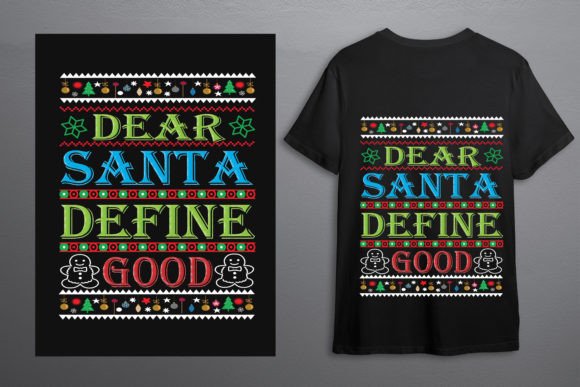
When I visualize this machine embroidery design on a thick, textured fleece, the lettering needs to be legible despite the nap of the fabric. The phrase "Dear Santa, Define Good" implies a specific visual hierarchy. If the text is too dense, the stitching might struggle to lay flat against the soft fibers, creating a puffy, uneven look that detracts from the message. Conversely, if the design is too sparse, it might look thin and cheap on a premium garment. In my experience, designs with complex curves or tiny serifs often fail on stretchy fabrics unless the correct stabilizer is used. This design seems to lean towards a fun, casual vibe, which usually translates well to casual wear, but the execution depends entirely on your setup.
Consider also the versatility of this asset. While marketed as a graphic for apparel, could it work as an embroidered patch? Or perhaps a decorative accent on a kitchen towel? The humor fits a tea towel perfectly, especially during the holidays. However, the stitch density becomes critical here. Kitchen towels are frequently washed, so the thread must hold up without fraying or pulling away from the fabric. If Ugly Sweater - Dear Santa, Define Good relies heavily on long, unsupported stitches, it might not survive the rigors of a dishwasher cycle. Always test the durability of the design on scrap fabric before committing to a finished product meant for sale.
Navigating Fabric and Hoop Challenges
Not every surface is created equal, and understanding where to place Ugly Sweater - Dear Santa, Define Good is just as important as knowing how to stitch it. There are specific scenarios where this design requires caution. For instance, attempting to embroider this on a curved surface like a baseball cap can be tricky. Unless the design has been specifically digitized with curve compensation, the text might appear distorted or stretched, ruining the humorous intent of the message.
Similarly, if you plan to use this on dark fabric, the choice of thread colors becomes paramount. A light-colored text on a black sweater will pop, but it may require a high level of underlay to prevent the dark background from showing through the stitches. On the other hand, using this design on a white or light-colored item offers more flexibility but might lack the contrast needed to make the "ugly sweater" theme stand out. The texture of the fabric also plays a role; smooth fabrics like satin or tightly woven cotton allow for crisp edges, while loose knits or chenille can swallow up fine details.
One area where many designers stumble is the hoop size. If the design includes intricate elements or large areas of satin stitch, a small hoop might cause the fabric to bunch up, leading to puckering. Before you start production, verify the dimensions of the design and ensure your machine can accommodate the required area. If the design is intended for a tote bag, the center of the bag might offer a stable, flat surface, whereas the seams near the handles could create uneven tension issues.
Design Assets and Commercial Viability
For those of you running a craft business or selling small shop products, the value of a design lies in its ability to elevate the perceived quality of your brand. A well-executed embroidery project builds trust with buyers. If Ugly Sweater - Dear Santa, Define Good is stitched cleanly, with consistent tension and no skipped stitches, it signals professionalism. Customers are willing to pay a premium for items that look polished, even if the design itself is whimsical or "ugly."
However, you must be mindful of the licensing terms. Before you begin mass-producing custom apparel or listing these items on your Etsy listings, confirm whether the purchase allows for commercial use. Some digital embroidery files are restricted to personal projects only. Using a design commercially without the proper license can lead to legal trouble and damage your reputation. Additionally, check if the file format is compatible with your specific machine software. Not all formats work seamlessly across different brands, and converting them incorrectly can alter the stitch path, resulting in poor quality output.
Practical Tips for the Final Product
To ensure that your final product meets your high standards, I recommend a few steps before you run a full batch. First, always test the design on a scrap piece of the same fabric you intend to use. This allows you to adjust the stitch density and check for any potential issues with the running stitch or fill stitch areas. Second, review the design in black and white mockups to see how the contrast holds up without the distraction of color. This helps you determine if the composition works visually regardless of the thread palette.
Finally, inspect the small details closely. Does the text remain readable after washing? Do the corners of the letters hold their shape, or do they round off? These nuances define the difference between a hobbyist project and a professional finished product. If you are creating a personalized gift, the attention to detail is what makes the recipient feel special. If you are selling holiday embroidery items, consistency is key to maintaining your brand identity.
In conclusion, Ugly Sweater - Dear Santa, Define Good offers a fun, engaging concept that has strong potential for the holiday market. Whether you are designing for a baby item, a sweatshirt, or a home decor piece, the success of this design rests on your preparation and execution. By paying attention to fabric choices, stabilizer types, and testing procedures, you can transform a simple digital graphic into a cherished handmade item. Remember, the best designs are not just about the image on the screen, but about the care and skill put into bringing them to life.