Proud Veteran Dad: A Designer's Real-World Embroidery Review
As a professional designer who spends hours evaluating digital assets for real-world production, I rarely get excited about a new download without first asking one question: will this actually hold up when the needle hits the fabric? Recently, I pulled Proud Veteran Dad from my library to test its viability for a specific client project involving custom embroidered caps and holiday gift sets. My goal was to see if this design could transition smoothly from a digital preview on a screen to a high-quality finished product that customers would be proud to wear or display.
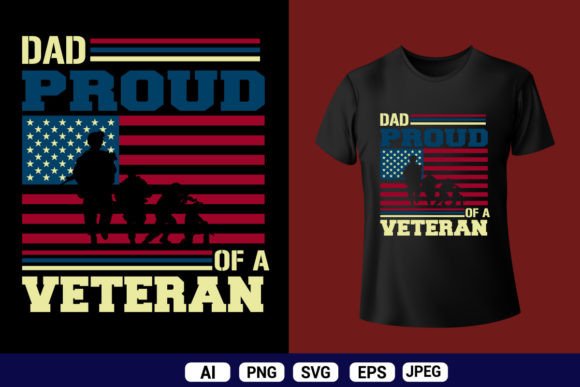
The initial impression of Proud Veteran Dad is one of straightforward pride. The layout feels balanced and the visual personality leans heavily into classic Americana themes, which makes it incredibly versatile for various embroidery projects. Unlike many designs that rely on overly complex gradients or tiny, indistinct details, this piece seems built for clarity. It captures the essence of respect and honor without needing excessive ornamentation. For an embroidery designer, that simplicity is often a blessing, as it suggests fewer potential points of failure during the stitching process.
From Digital File to Finished Product
When I opened the files, the immediate concern for any maker is scalability. You need to know if a design intended for a large chest print can shrink down effectively for a baby onesie or a small tote bag. The description highlights that you receive 1 SVG file, 1 EPS file, 1 PNG with 1200x1200 px at 300 dpi, and 1 JPG file. This variety is crucial for workflow flexibility. Having vector shapes means I could resize the artwork instantly without losing quality, a non-negotiable feature for anyone selling handmade products.
I decided to test Proud Veteran Dad on a few different substrates to simulate a real commercial environment. First, I placed it on a dark navy sweatshirt. The contrast was excellent, allowing the thread colors to pop against the heavy cotton blend. However, the density of the fill stitches required careful attention. If the stitch density is too high on a thick fabric like a sweatshirt, the material can pucker around the edges. I had to adjust the stabilizer choice, opting for a cut-away backing rather than a tear-away to ensure the design stayed flat over time.
Next, I moved to a lighter application: a canvas tote bag. Here, the design shone. The clean lines of the text and graphics translated beautifully onto the woven texture of the canvas. It felt natural, almost as if the design was born to be stitched onto durable goods. This versatility is exactly what Etsy sellers and small shop owners need. A single asset like this can serve as a centerpiece for a Father's Day collection, a birthday gift for a grandfather, or merchandise for a local veterans' organization event.
Where to Use (and Where to Pause)
While Proud Veteran Dad is a strong candidate for most apparel and home decor items, there are specific scenarios where caution is required. As an experienced reviewer, I have seen beautiful designs fail because they were applied to unsuitable surfaces. For instance, using this design on a curved surface like a baseball cap requires precise digitizing adjustments. If the original file does not account for the curvature of the hat, the text might look distorted once stitched.
Small hoop sizes present another challenge. If you plan to use this design for a very small item, such as a pocket square or a tiny patch, you must inspect the fine details closely. Tiny lettering or intricate decorative accents can sometimes disappear in a tight hoop, especially if the thread tension is slightly off. Always test the design on scrap fabric before committing to your final product. This step saves money on materials and prevents customer complaints about blurry or incomplete embroidery.
Fabric texture also plays a massive role in the final look. On stretchy fabrics like jersey knits, the design needs a robust stabilizer system to prevent distortion. If you are working with thin fabric, the weight of the threads might cause the material to sag. In these cases, Proud Veteran Dad might need to be simplified or paired with a heavier stabilizer to maintain structural integrity. Similarly, on dark fabrics, ensure that the thread colors chosen provide enough contrast; otherwise, the design may lose its impact and appear muddy under certain lighting conditions.
Impact on Brand Value and Customer Trust
In the world of handmade commerce, the quality of your embroidery speaks volumes about your brand. Customers buying personalized gifts or boutique products expect perfection. A sloppy stitch job can ruin the perceived value of a $50 sweatshirt or a custom apron. Proud Veteran Dad, when executed correctly, elevates the finished product by adding a layer of professionalism and emotional resonance.
The design's ability to convey "Proud Veteran Dad" clearly helps build an instant connection with the buyer. It is not just a graphic; it is a statement of identity. When a customer sees a well-stitched version of this design on a coffee mug, a pillow cover, or a kitchen towel, they recognize the sentiment immediately. This recognition drives engagement and encourages repeat business. For craft fair vendors, having a design that looks sharp and respectful can make the difference between a casual glance and a purchase.
Furthermore, the clean vector nature of the file allows for easy color customization. You can swap out thread colors to match specific branding guidelines or personal preferences. This adaptability is essential for creating cohesive product lines. Imagine a series of matching items: a tote bag, a cap, and a tea towel, all featuring Proud Veteran Dad but with coordinated thread palettes. This level of consistency strengthens your brand identity and makes your shop look more established.
Practical Notes for the Embroidery Designer
Before you hit the start button on your machine, there are several technical checks you should perform. First, review the stitch density. High-density areas can lead to thread breakage or fabric puckering, so verify that the fill stitches are optimized for the fabric type you are using. Second, confirm the hoop size requirements. Ensure your design fits within your machine's maximum hoop dimensions without requiring awkward re-hooping.
Thread color selection is critical. Test your choices on a light and dark background mockup to ensure visibility. Don't assume a color will work just because it looks good on screen; lighting conditions vary wildly in physical spaces. Additionally, always check the licensing terms. While the file includes 100 vector shapes and is resizable, you must confirm whether you have the right to sell finished items made with this design. Some licenses restrict commercial use or require attribution.
Finally, remember that testing is key. Run a sample on scrap fabric using the same stabilizer and thread you plan to use for the final project. Inspect the back of the work for loose threads or excessive pull. Check the corners and curves for smoothness. If the design passes these tests, you can proceed with confidence, knowing that Proud Veteran Dad will deliver a polished result.
Ultimately, Proud Veteran Dad is more than just a graphic; it is a tool for creating meaningful connections through craftsmanship. Whether you are a hobbyist making a gift for a family member or a seasoned entrepreneur building a line of patriotic merchandise, this design offers a solid foundation for success. By paying attention to the details of execution, you can transform a simple digital file into a cherished heirloom that honors the spirit of service and family.